Guest Post: Week 5 - Argentina & Chile Food Review

Guest post time.
This one goes out to the fat boys, the drinkers, and the tummy-problem warriors.
I like to eat. Who doesn’t? And I can really eat a lot. I am known in Pittsfield, New Hampshire as the King of Pittsfield because of my ability to eat.
I like to drink, responsibly. When traveling to new places, I feel it is my responsibility to drink like a local.
For those of you who are my fellow tummy-problem friends, I am happy to share that the reports are true. It is not our fault, the US is poisoning us. No tummy issues for me down in South America.
Anyways, the food of Argentina was great. The food of Chile was fine. Here were some of our favorite’s. Also, don't miss out on the recipes we got from locals at the end:
Favorite Foods
Lomo & Bife de Chorizo
Lomo = beef tenderloin
Bife de Chorizo = sirloin strip
Beef, typically eaten in Asado, is a staple of Argentine cuisine. The Spanish brought cattle to Argentina in the 1500s. The guachos tend to the cattle. The people of the country grill out, at what is known as an “asado.”
We had steak everywhere. A highlight for the beef was at Parilla Peña. I like my meat establishments to be run by men in their 50’s, with bellies, wearing white aprons & hats.
Locro
Locro = The way I would describe Locro is a hearty sausage, bean, and corn stew. Great for the cold. I loved it.
We had Locro in El Chalten, the mountain town at the base of Mt Fitzroy.
It's considered Argentina's most patriotic dish, traditionally eaten on national holidays and through winter as a symbol of Andean and gaucho heritage.

Pastel de Choclo
Pastel de Choclo = Corn Pie (direct translation)
I thought the Chilean food was average. But, after an adventure to find a place to get the van washed, we wandered into what was definitely a local establishment. They called out their Pastel de Choclo as a must try, it was exceptional.
It is a baked casserole filled with spiced ground beef, chicken, onion, olives, and hard boiled egg. It is topped with a thick creamed corn crust that turns golden in the oven.

Sorrentino’s & Raviolis
Sorrentino = a jumbo, circular ravioli
Unique to Argentina, the sorrentino is an example of the strong italian influence on the country. In the late 1800's over 2 million Italians immigrated to Argentina. Their influence is very apparent in the cuisine.
We had sorrentinos & raviolis in both El Chalten & in Buenos Aires. Both were homemade pasta filled with beef, ham & cheese, or even Guanaco.

Empanadas
Empanada = a stuffed pastry filled with kind of everything. Can be fried or baked.
We had empanadas all the time, across both Chile & Argentina. We also got to make empanadas in a cooking class in Buenos Aires. Surprise recipes at the end.
A fun fact - the shape of the empanada tells you what is inside of it.
Those were some of our favorites. On the flip side, one of our least favorite foods was the guanaco. You may recognize this guy:

Well, we ate him. He was fine. Kind of gamey & tough. Go for the beef over the guanaco.
Honorable Mentions
Seafood of Patagonia
The southern king crab, Centolla, found in Patagonia. Ceviche, oysters, and salmon.
Dulce de Leche
A caramel-like topping made by slowly heating sweetened milk until it reduces and caramelizes. Eaten with alfajores, pancakes, medialunas, and more.
Alfajores
A fancy oreo. It is made with crumbly shortbread rounds held together with a thick layer of dulce de leche, often rolled in coconut or dipped in chocolate.
Pan
Bread is served everywhere. A notable pastry is the medialuna (half moon). It is a mini-croissant.
The Drink
Espresso
What I like to call a 'nap in a cup.' A staple of the cafe culture, and one of the reasons they eat dinner at 10pm, and don't get to the club until 3am.
Mate
Mate = caffeinated, herbal drink made with hot water & dried yerba mate leaves
We only had this once, but got to learn some of the cool cultural rules of mate ("Ma-Tay").
First, mate is meant to be shared. Even with random people. If a rando asks you for a hit of your mate, you should pass the straw (bombilla).
Second, the holder of the mate is the only one who can serve it. Don't take the mate from the 'server.'
Third, you only say thank you to the 'server' if you do not want any more of the mate. Otherwise, just return the mate.
Pisco Sour
Pisco = a brandy with contested origins. Chile & Peru contest the ownership of pisco.
Pisco, lemons, sugar.
We had some with glacier ice, which was cool.
Calafate Sour
Calafate Sour = pisco sour, but with calafate berry syrup
The calafate berry is only found in Patagonia. It is sort of like a blueberry, but sweeter. The town of Calafate, in Argentina, is named after this berry.
Pisco, lemon, sugar, calafate syrup.
Carménère
Carmenere = a Chilean red wine
Fun fact: Carménère originally came from Bordeaux, France, where it was one of the classic blending grapes until the great phylloxera epidemic of the late 1800s wiped out virtually all the vineyards in Europe. It was assumed extinct. Meanwhile Chilean winemakers had imported cuttings before the epidemic hit and had been growing it for decades, but assumed it was Merlot, since the two look nearly identical in the vineyard.
In 1994 a French ampelographer (vine expert) visiting Chile tasted what was labelled as Merlot and realized it was something else entirely, and DNA testing confirmed it was the long-lost Carménère. Chile had been accidentally preserving an extinct French grape for over a century without knowing it.

Recipes
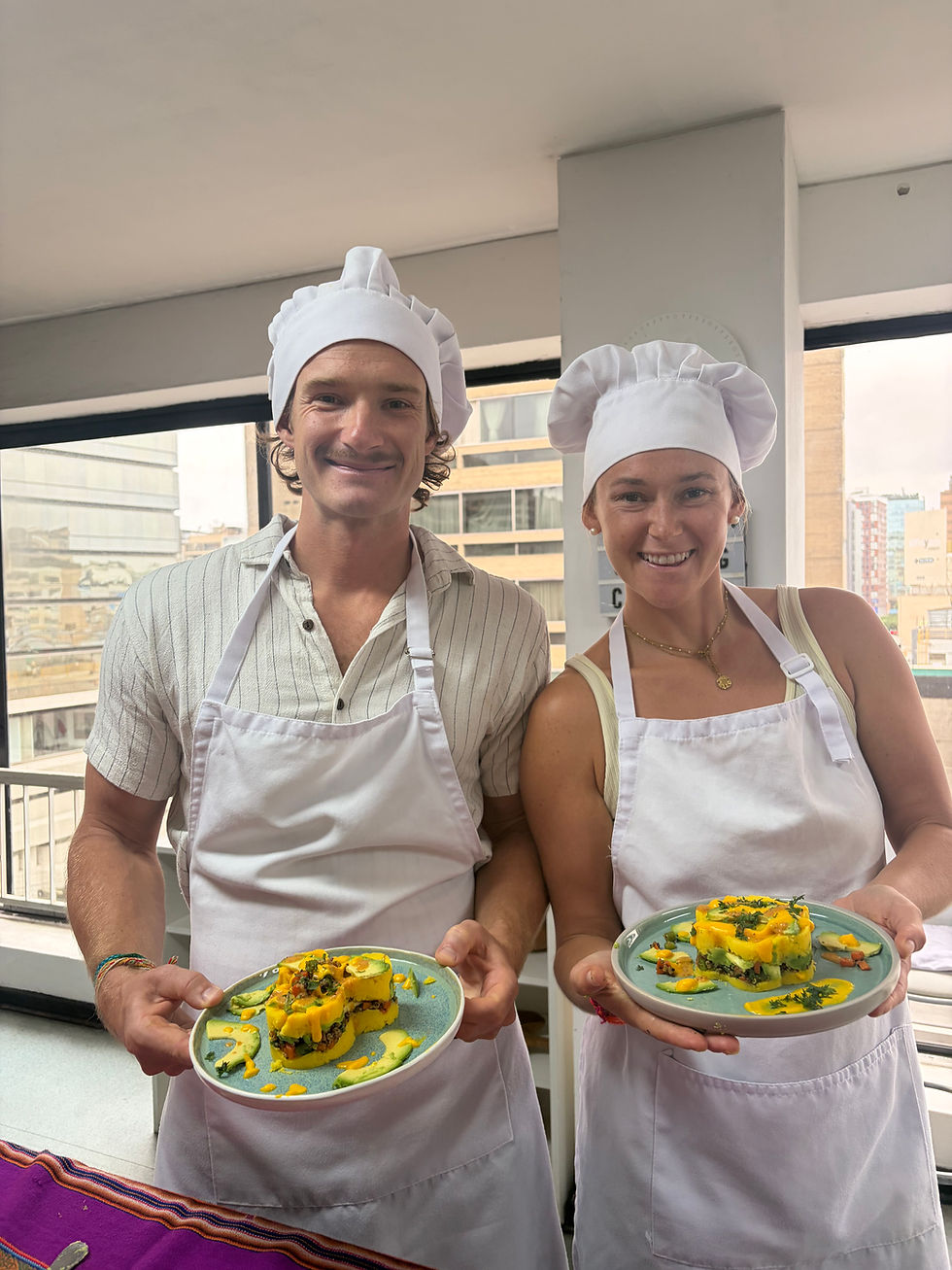
If you have made it this far, and if you like to cook, your reward are a few locally-sourced recipes. Shoutout to Pachamam Cooking in Buenos Aires. Epic cooking class & recipes.

Chimichurri
Fun fact: most people neglect to add vinegar to the chimichurri. You should actually have more vinegar than oil.

Empanada
These are actually really easy to make.

Calafate Sour
2 parts Chilean Pisco
1 part calafate syrup
1 part lemon juice
1/2 part simple syrup
1 egg white

To Wrap - High | Low | Unexpected | Learned
Nick:
High: Asado at Parilla Peña in Buenos Aires
Low: Slight tummy issues the first night in the van
Unexpected: How large the Italian influence is in Argentina
Learned: Different shapes of empanadas signify their filling
Mary Kate:
High: Raviolis in Buenos Aires & the glacier ice pisco sour
Low: The guanaco
Unexpected: How much they are into their teas & infusions
Learned: The calafate berry can only be found in Patagonia.
Someone once told me, “Once a fat boy, always a fat boy.” Cheers to that.
Nick King


Comments